Best Courses After Mechanical Engineering for High-Paying Jobs
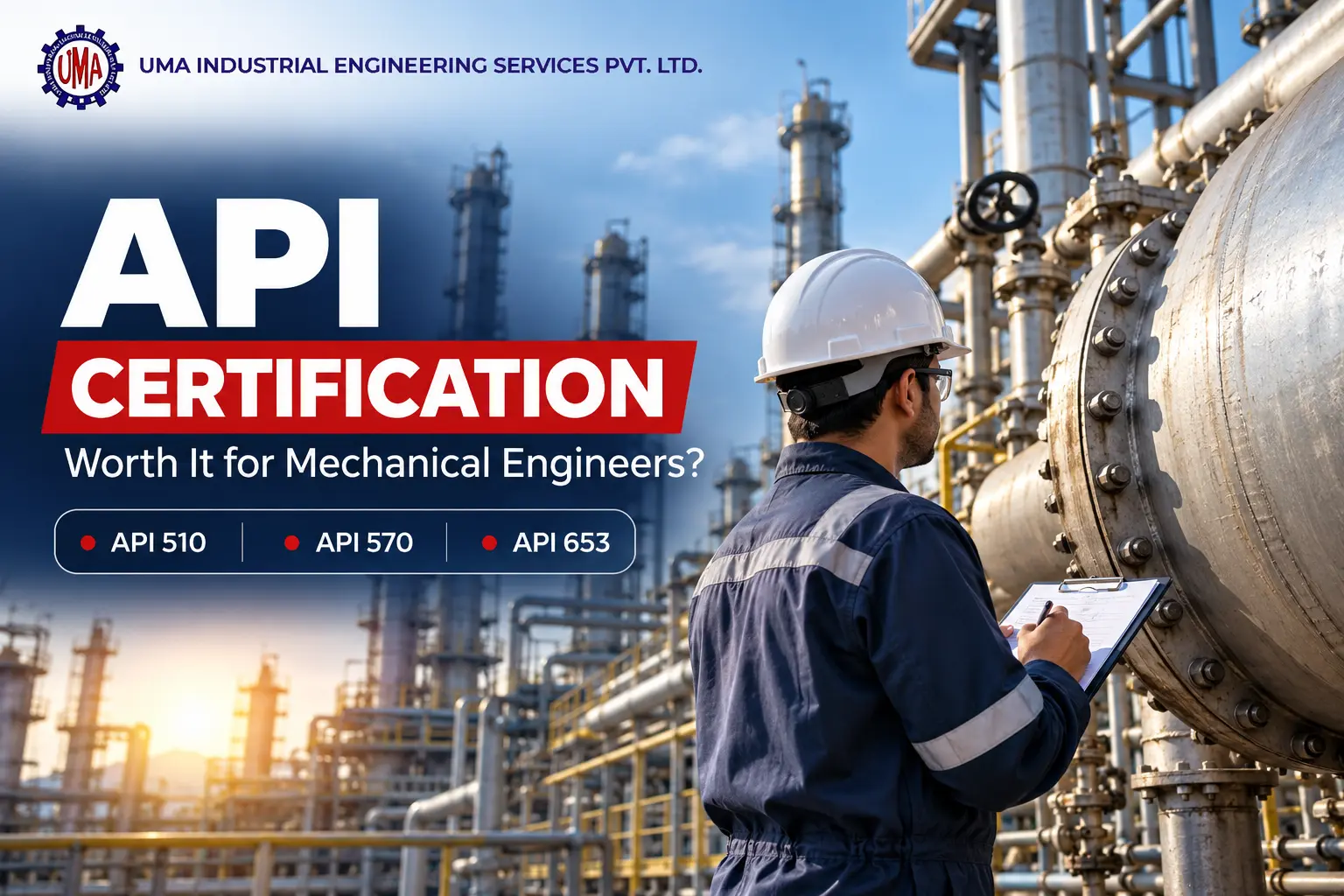
Mechanical engineering opens doors to several industries, including manufacturing, oil & gas, petrochemicals, construction, fabrication, maintenance and industrial inspection. However, completing a mechanical engineering degree is often just the beginning of a professional journey.
As industries become more specialized, employers increasingly look for candidates with practical knowledge, technical expertise and relevant professional certifications. This is why many mechanical engineering graduates consider additional courses to strengthen their profiles and explore better career opportunities.
But which course should you choose after mechanical engineering?
The answer depends on your career interests, preferred industry and the type of job you want to pursue. Specializations such as NDT, PAUT & TOFD, API inspection, CSWIP, BGAS and QA/QC can help mechanical engineers develop industry-specific skills.
In this blog, we explore some of the best professional courses after mechanical engineering, their applications and the career paths they can support.
1. NDT Level 2 Certification
Non-Destructive Testing (NDT) is one of the most popular specialization options for mechanical engineers interested in quality control, industrial inspection and material testing.
NDT involves examining materials, components and welds without damaging or affecting their usability. It plays an important role in industries where equipment reliability and structural safety are essential.
Some commonly used NDT methods include:
- Ultrasonic Testing (UT)
- Magnetic Particle Testing (MT)
- Liquid Penetrant Testing (PT)
- Radiographic Testing (RT)
- Visual Testing (VT)
- Eddy Current Testing (ET)
NDT Level II certification helps professionals develop the skills required to perform and evaluate inspections within the applicable certification scheme and employer requirements.
Career Opportunities: NDT Technician, Quality Inspector, Inspection Technician and Welding Inspection Professional.
Who Should Choose This Course?
Mechanical engineers interested in oil & gas, petrochemicals, fabrication, pipelines, manufacturing and industrial maintenance can consider NDT as a career specialization.
2. PAUT & TOFD Training
For mechanical engineers who want to advance their knowledge of ultrasonic inspection, Phased Array Ultrasonic Testing (PAUT) and Time of Flight Diffraction (TOFD) are valuable specialized techniques to explore.
Both methods are widely used for advanced weld inspection and industrial applications.
- PAUT: Uses multiple ultrasonic elements to inspect materials and welds from different angles, providing detailed inspection data.
- TOFD: Uses diffracted ultrasonic signals to detect and size flaws, particularly in weld inspection applications.
These techniques are especially relevant to pipeline inspection, pressure equipment, petrochemical plants and major industrial projects.
A logical learning progression may include:
NDT Fundamentals → UT → Relevant Level II Qualification → PAUT / TOFD
The required qualifications and experience depend on the certification scheme and intended application.
Career Opportunities: Advanced NDT Technician, PAUT Technician, TOFD Technician and Ultrasonic Testing Professional.
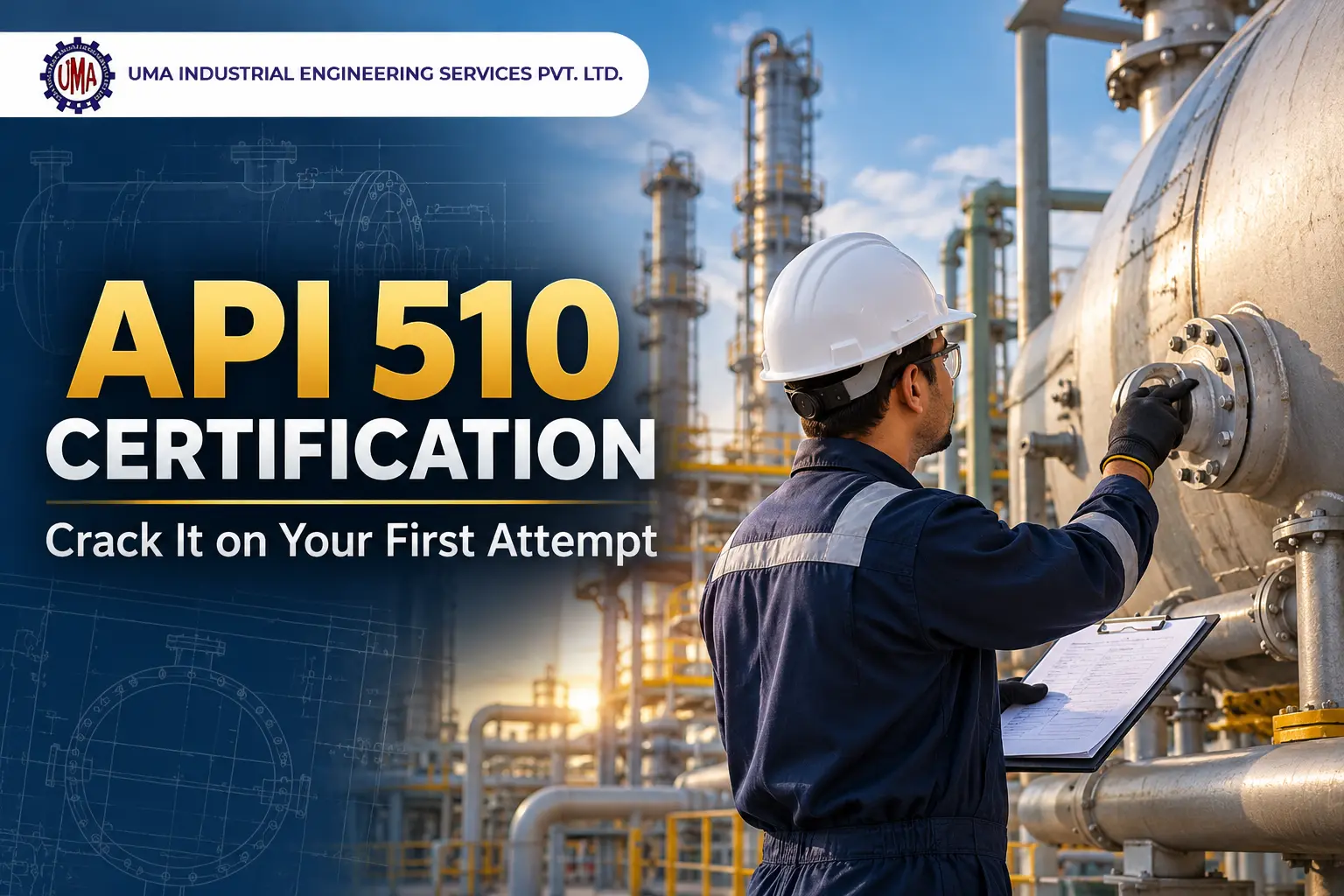
3. API 510 – Pressure Vessel Inspector
API 510 is a specialized certification pathway for mechanical engineers interested in pressure vessel inspection and mechanical integrity.
Pressure vessels are essential components in refineries, petrochemical plants and other process industries. Their inspection and maintenance are important for operational reliability and safety.
API 510 focuses on the inspection, repair, alteration and maintenance of pressure vessels.
The certification covers areas such as:
- Pressure vessel inspection
- Corrosion and damage mechanisms
- Inspection planning
- Repair and alteration requirements
- Applicable codes and standards
- Mechanical integrity
API certification has specific education and industry experience requirements. For example, candidates holding a bachelor’s degree or higher in engineering or technology are listed under an eligibility pathway requiring at least one year of relevant inspection experience.
Career Opportunities: Pressure Vessel Inspector, Mechanical Integrity Professional and Inspection Engineer.
4. API 570 – Piping Inspector
Mechanical engineers interested in industrial piping systems can explore API 570 certification.
Process piping is an important part of refineries, chemical plants and petrochemical facilities. Regular inspection and maintenance help identify corrosion, defects and other potential problems.
API 570 focuses on the inspection, repair, alteration and maintenance of in-service metallic piping systems.
Key areas include:
- Piping inspection techniques
- Corrosion monitoring
- Piping damage mechanisms
- Inspection intervals
- Repair and alteration requirements
- Applicable industry codes and standards
This specialization is particularly relevant for professionals working in refineries, process plants, petrochemical industries and industrial maintenance projects.
Career Opportunities: Piping Inspector, Inspection Engineer and Mechanical Integrity Specialist.
5. API 653 – Aboveground Storage Tank Inspector
API 653 is another important specialization for mechanical engineers interested in industrial inspection.
It focuses on the inspection, repair, alteration and reconstruction of aboveground storage tanks.
Storage tanks are commonly used in refineries, oil terminals, petrochemical facilities and industrial storage plants. Their structural condition and maintenance are essential for safe operations.
The certification covers areas such as:
- Storage tank inspection
- Corrosion assessment
- Tank repair and alteration
- Inspection requirements
- Structural integrity
- Applicable industry standards
API 653 has specific education and experience requirements, including relevant tank inspection experience.
Career Opportunities: Storage Tank Inspector, Inspection Engineer and Tank Maintenance Professional.
6. CSWIP Welding Inspector Certification
Welding is a critical process in fabrication, construction, pipelines and industrial manufacturing. Mechanical engineers interested in welding quality and inspection can consider CSWIP Welding Inspector training.
Welding inspectors ensure that welding activities meet the required technical specifications, procedures and quality standards.
Important areas covered in welding inspection include:
- Welding processes and techniques
- Weld defects and discontinuities
- Welding procedures
- Material identification
- Inspection methods
- Codes and standards
- Welding quality documentation
CSWIP 3.1 is a recognized welding inspection qualification, while CSWIP 3.2 provides a higher-level inspection pathway subject to its eligibility requirements.
Another established international certification route is AWS Certified Welding Inspector (CWI).
Career Opportunities: Welding Inspector, QA/QC Inspector, Fabrication Inspector and Welding Quality Professional.
7. BGAS / Coating Inspection Training
Mechanical engineers interested in corrosion protection, industrial construction and oil & gas projects can explore coating inspection.
Industrial structures, pipelines and storage tanks require protective coatings to reduce corrosion and improve their service life.
Coating inspectors are responsible for checking surface preparation, application procedures and coating quality.
Key areas include:
- Surface preparation
- Coating application procedures
- Environmental conditions
- Dry Film Thickness (DFT) measurement
- Coating inspection
- Quality documentation
- Corrosion protection standards
BGAS-related training can help professionals develop specialized knowledge in painting and coating inspection.
Career Opportunities: Painting Inspector, Coating Inspector, QA/QC Inspector and Corrosion Protection Professional.
8. QA/QC Training for Mechanical Engineers
Quality Assurance and Quality Control (QA/QC) are essential functions across manufacturing, fabrication, construction and industrial projects.
Mechanical engineers interested in quality management, documentation and inspection can consider QA/QC training.
QA/QC professionals help ensure that materials, processes and finished products meet the required specifications and quality standards.
Common areas of responsibility include:
- Inspection and Test Plans (ITP)
- Material inspection
- Welding documentation
- Quality control procedures
- Non-Conformance Reports (NCR)
- Fabrication inspection
- Vendor inspection
- Project quality documentation
QA/QC knowledge becomes particularly valuable when combined with specialized skills such as NDT, welding inspection or mechanical inspection.
Career Opportunities: QA/QC Engineer, Quality Inspector, Vendor Inspector and Quality Control Professional.
9. Lead Auditor Training
For mechanical engineers interested in quality management systems, auditing and compliance, Lead Auditor training offers another career development option.
Unlike NDT or equipment inspection, Lead Auditor training focuses on evaluating organizational processes and management systems.
It helps professionals understand:
- Quality management systems
- Audit planning and execution
- Compliance requirements
- Documentation and reporting
- Corrective actions
- Continuous improvement
This specialization can be useful for professionals looking to develop careers in quality management, auditing and compliance.
Career Opportunities: Quality Auditor, Lead Auditor, Quality Management Professional and Compliance Specialist.
10. How to Choose the Right Course After Mechanical Engineering
Choosing a professional course should depend on your career objective rather than simply following popular certifications.
Here is a quick guide to help you identify a suitable specialization:
| Career Interest | Recommended Courses |
|---|---|
| NDT Inspection | NDT Level 2, UT, MT, PT, RT, VT |
| Advanced NDT | PAUT, TOFD, Eddy Current Testing, ACFM |
| Pressure Vessel Inspection | API 510 |
| Piping Inspection | API 570 |
| Storage Tank Inspection | API 653 |
| Welding Inspection | CSWIP 3.1 / 3.2 |
| Coating Inspection | BGAS / Coating Inspection |
| Quality Control | QA/QC Training |
| Quality Management | Lead Auditor |
| Mechanical Integrity | API Certifications + NDT + Inspection Experience |
Before enrolling in a course, consider the industry you want to enter, the type of work you prefer and the qualifications required by your target employers.
Can You Combine Multiple Courses After Mechanical Engineering?
Yes. Mechanical engineers can build a broader professional profile by combining complementary technical skills and certifications.
For example, these career pathways can help you understand how different courses fit together.
Path 1: NDT Inspection Career
Mechanical Engineering → NDT Level 2 → UT → PAUT / TOFD
Path 2: Pressure Vessel Inspection Career
Mechanical Engineering → Inspection Experience → API 510 → Pressure Vessel Inspection
Path 3: Piping Inspection Career
Mechanical Engineering → QA/QC Knowledge → Relevant Inspection Experience → API 570
Path 4: Welding Inspection Career
Mechanical Engineering → Welding Knowledge → CSWIP Certification → Practical Inspection Experience
Path 5: Comprehensive Inspection Profile
Mechanical Engineering → NDT → QA/QC → Welding Inspection / API Specialization
The best combination depends on your existing knowledge, industry exposure and long-term career goals.
What Salary Can You Expect After These Courses?
One of the biggest reasons mechanical engineers pursue professional certifications is the opportunity to access specialized and potentially better-paying roles.
However, completing a certification does not guarantee a particular salary or job placement.
Your earning potential can depend on several factors:
- Relevant industry experience
- Practical inspection skills
- Certification and qualification level
- Employer and project requirements
- Industry and location
- International project exposure
- Technical responsibilities
For example, an engineer with relevant inspection experience, practical NDT knowledge and an appropriate API certification may qualify for opportunities that require specialized inspection expertise.
Instead of selecting a course based only on salary expectations, focus on developing skills that match industry requirements.
5 Things to Check Before Joining a Professional Course
Before investing in technical training, consider these five important points:
1. Identify Your Target Industry
Decide whether you want to work in oil & gas, petrochemicals, manufacturing, fabrication, construction or industrial inspection.
2. Understand the Job Role
Determine whether you are interested in NDT inspection, welding inspection, QA/QC, mechanical integrity or quality management.
3. Check Your Existing Qualifications
Some advanced certifications require relevant work experience, practical exposure or specific educational qualifications.
4. Verify Certification Requirements
Always check the official certification body’s eligibility criteria, examination requirements and applicable certification scheme before enrolling.
5. Choose Practical, Industry-Relevant Training
Look for training that builds technical understanding and prepares you for the actual responsibilities of your target role.
Remember, the strongest professional profile often combines:
Mechanical Engineering + Specialized Technical Skills + Practical Experience + Relevant Certification
Why Choose UMA Industrial for Professional Training?
UMA Industrial Engineering Services Pvt. Ltd. provides industry-focused technical training for mechanical engineers and professionals interested in NDT, inspection, welding and QA/QC careers.
With a focus on specialized industrial training, UMA Industrial offers programs designed to help candidates strengthen their technical knowledge and explore relevant professional certification pathways.
Training Programs Offered at UMA Industrial:
- NDT Level 2 Training
- PCN NDT UT Level II
- PCN 3.1 & 3.2
- PAUT & TOFD Training
- ACFM Training
- Eddy Current Testing
- CSWIP 3.1 & 3.2 Preparatory Training
- BGAS Training
- QA/QC Training
- Lead Auditor Training
- API 510 Training
- API 570 Training
- API 653 Training
Whether you are a fresh mechanical engineering graduate or an experienced professional looking to upgrade your technical skills, choosing the right training pathway can help you work towards your career goals.
Final Thoughts
Mechanical engineering provides a strong foundation, but specialized knowledge can help you explore more focused career opportunities across industrial sectors.
From NDT Level 2 and PAUT & TOFD to API 510, API 570, API 653, CSWIP, BGAS and QA/QC, each course offers a different professional direction.
There is no single best course for every mechanical engineer. The right choice depends on your interests, industry requirements, qualifications and career ambitions.
Rather than collecting multiple certificates without a clear objective, focus on building a specialization supported by practical knowledge and relevant experience.
Start Your Professional Journey with UMA Industrial
Looking to build a specialized career after Mechanical Engineering?
Explore industry-focused training programs in NDT, API, CSWIP, BGAS, QA/QC, PAUT & TOFD and other inspection disciplines with UMA Industrial Engineering Services Pvt. Ltd.
Contact UMA Industrial Today
Phone: +91 97277 44503
Email: [email protected]
Website: www.umaindustrialengineeringservices.com
Take the next step towards developing your technical skills and building a career in industrial inspection and engineering.