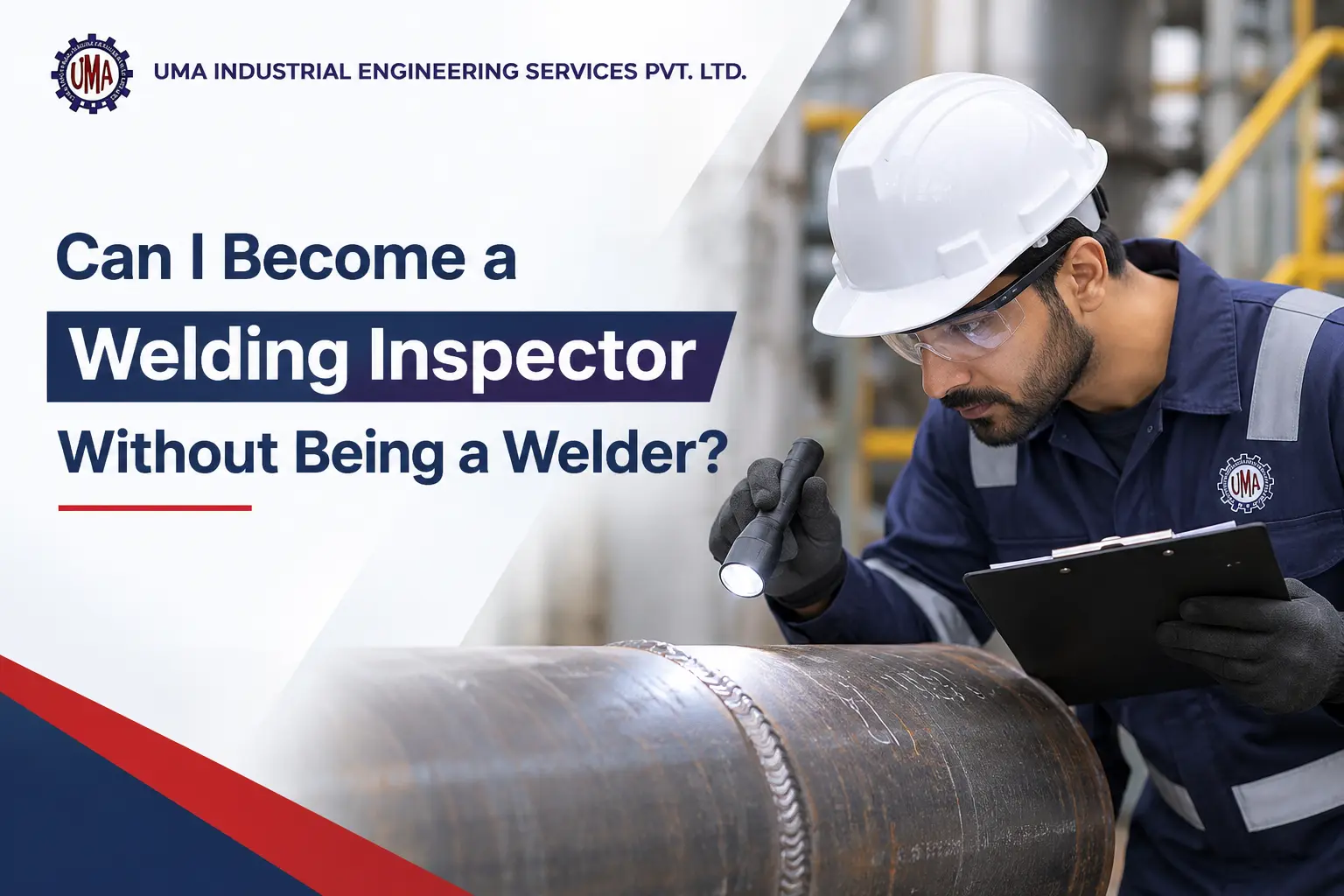
Can I Become a Welding Inspector Without Being a Welder?
Many people interested in welding inspection believe they must first become professional welders. But is that really necessary?
No, you do not need to be a qualified welder to become a Welding Inspector. However, you must develop a strong understanding of welding processes, weld defects, inspection techniques and quality standards.
Welding inspection is a technical profession that focuses on ensuring welded joints meet the required specifications, industry codes and quality standards.
Let’s explore how you can enter the welding inspection field without having a background in professional welding.
What Does a Welding Inspector Do?
A Welding Inspector is responsible for checking the quality of welded joints at different stages of fabrication, manufacturing and construction.
Some of the key responsibilities include:
- Visually inspecting welds for defects and irregularities.
- Identifying cracks, porosity, undercut and incomplete fusion.
- Checking Welding Procedure Specifications (WPS) and related documents.
- Verifying base materials and welding consumables.
- Reviewing inspection reports and test results.
- Ensuring welded joints comply with applicable codes and acceptance criteria.
A Welding Inspector must understand how welding works, even if they do not personally perform welding operations.
Do You Need Practical Welding Experience?
Practical welding experience can be beneficial, but it is not the only pathway into welding inspection.
Professionals with backgrounds in mechanical engineering, production, quality control and fabrication can also develop the skills required for this role.
What matters most is developing a strong understanding of:
- Welding Processes: Different welding techniques such as SMAW, GTAW and GMAW.
- Welding Defects: Common defects, their causes and their impact on weld quality.
- Technical Drawings: Welding symbols, engineering drawings and fabrication requirements.
- Welding Documentation: Welding Procedure Specifications (WPS) and related records.
- Inspection Techniques: Visual inspection methods and acceptance criteria.
- Codes and Standards: Applicable welding codes, specifications and industry requirements.
Understanding these subjects helps inspectors evaluate weld quality and identify potential issues effectively.
How Can You Become a Welding Inspector Without Being a Welder?
If you do not have a professional welding background, you can follow a structured learning pathway to develop the necessary technical knowledge.
1. Build Your Technical Foundation
Start by learning the fundamentals of welding processes, materials, fabrication terminology and common weld defects. Understanding these basics will help you develop the technical knowledge required for inspection work.
2. Learn Visual Welding Inspection
Visual inspection is one of the fundamental skills required in welding inspection. Learn how to examine weld profiles, dimensions, surface defects and other quality requirements.
3. Explore Professional Welding Inspection Training
Professional training can help you understand inspection procedures, industry standards and practical requirements.
Courses such as CSWIP Visual Welding Inspector (3.0) and CSWIP Welding Inspector (3.1) offer structured learning pathways. The appropriate course depends on your educational background, professional experience and eligibility.
4. Gain Relevant Practical Experience
Practical exposure to fabrication, production, quality control and welding inspection can help strengthen your understanding.
Working alongside experienced professionals also helps you understand real-world inspection procedures and industry expectations.
5. Check Certification Eligibility Requirements
Before enrolling in a certification pathway, understand the applicable eligibility requirements.
Completing a training course does not automatically make you eligible for a certification examination. For example, the CSWIP 3.1 certification route has specific experience requirements that candidates should verify before applying.
Is Welding Inspection a Good Career Option for Engineers?
Yes, welding inspection can be a promising career pathway for mechanical engineers, diploma holders and professionals working in fabrication, production or quality control.
Several industries require qualified welding inspection professionals, including:
- Oil & Gas
- Construction and Infrastructure
- Power Generation
- Shipbuilding
- Manufacturing and Fabrication
- Petrochemical Industries
These industries require proper welding quality checks to ensure structural integrity, safety and compliance with project specifications.
With suitable technical training, practical experience and relevant qualifications, professionals can develop their expertise in welding inspection and quality assurance.
Start Your Welding Inspection Training with UMA Industrial
You do not necessarily need to begin your career as a professional welder to explore welding inspection. What you need is the right technical foundation, structured training and relevant practical exposure.
At UMA Industrial Engineering Services Pvt. Ltd., you can explore professional welding inspection training opportunities, including CSWIP preparatory courses.
Build your technical knowledge, understand industry inspection requirements and take the next step towards developing your career in welding inspection.
Enquire Now: +91 97277 44503
Website: www.umaindustrialengineeringservices.com
Frequently Asked Questions (FAQs)
1. Can I become a Welding Inspector without being a welder?
Yes. Being a qualified welder is not a universal requirement for becoming a Welding Inspector. However, relevant technical knowledge, industry understanding and professional experience are important.
2. Can a mechanical engineer become a Welding Inspector?
Yes. Mechanical engineers can explore welding inspection by developing knowledge of welding processes, weld defects, inspection procedures and applicable industry standards.
3. Which welding inspection course should beginners consider?
CSWIP Visual Welding Inspector (3.0) is one possible starting point for individuals exploring welding inspection. Candidates should check the current training and examination requirements before enrolling.
4. Is CSWIP 3.1 suitable for freshers?
CSWIP 3.1 has specific eligibility and experience requirements. Freshers should first understand the available entry-level training pathways before choosing a certification route.
5. Do Welding Inspectors need to understand welding defects?
Yes. Identifying, understanding and evaluating welding defects is an essential part of welding inspection. Inspectors must know how defects occur and how they affect weld quality.
Contact UMA Industrial Engineering Services Pvt. Ltd. to explore professional welding inspection training opportunities.