Mechanical Engineering Jobs in UAE: Essential Skills and Certifications You Need
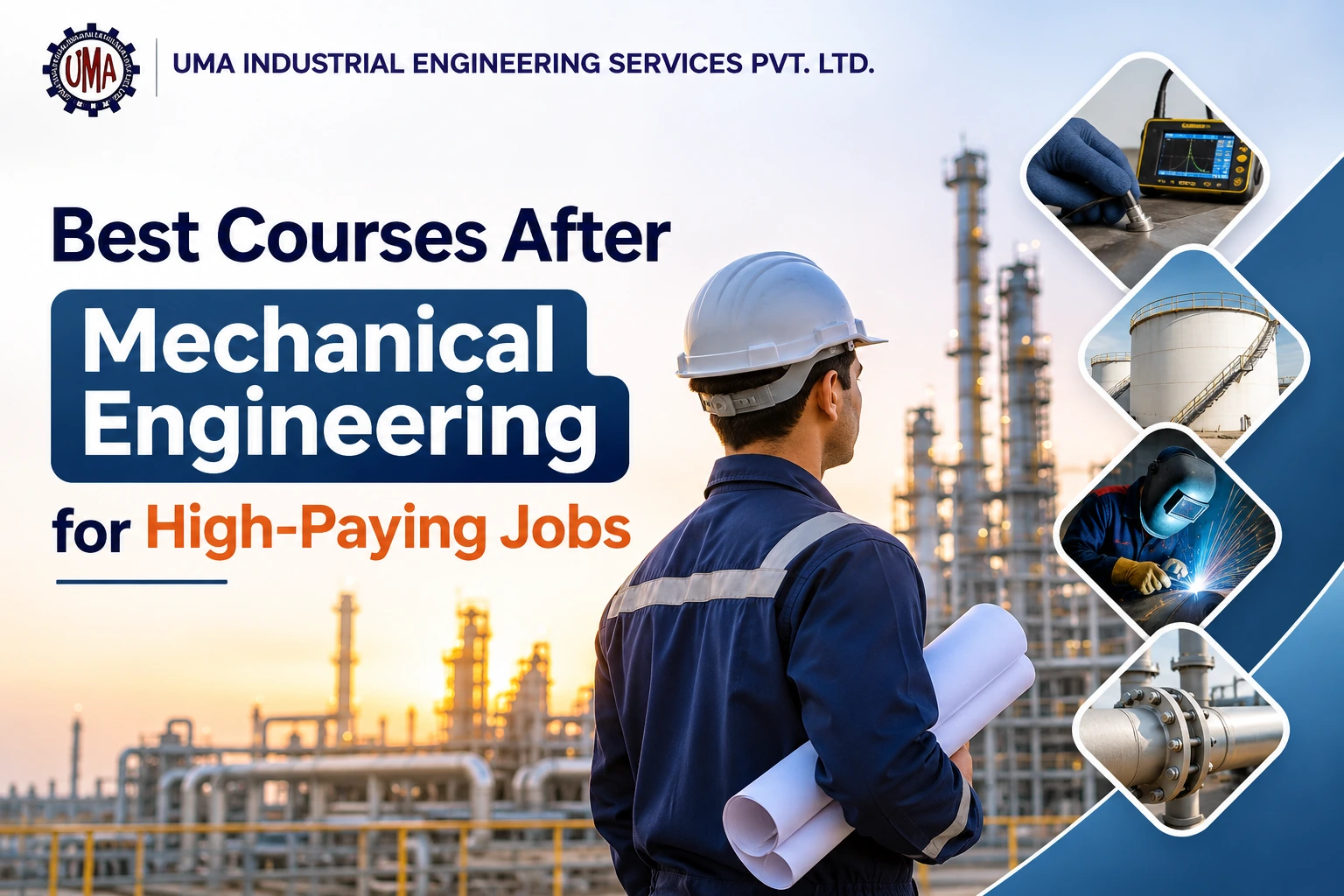
The UAE has become an attractive destination for mechanical engineers looking to build careers in industries such as oil and gas, petrochemicals, construction, manufacturing, fabrication, EPC and industrial maintenance.
However, having a Mechanical Engineering degree alone may not always be enough to secure specialized positions. Employers increasingly look for professionals who combine technical knowledge with practical industry experience, inspection skills, relevant certifications and an understanding of international engineering standards.
Recent UAE job requirements frequently highlight skills in QA/QC, welding inspection, Non-Destructive Testing (NDT), material inspection, technical documentation and project coordination. Depending on the position, employers may also prefer certifications such as CSWIP, BGAS, NDT Level II and API qualifications.
So, if you are a mechanical engineer planning to explore job opportunities in the UAE, understanding which skills to develop can give your career a clearer direction.
Let’s explore the essential skills and certifications that can help you prepare for the UAE mechanical engineering job market.
1. Strong Mechanical Engineering Fundamentals
A strong understanding of mechanical engineering principles is the foundation of every successful engineering career.
Before pursuing specialized training or certifications, make sure you understand the fundamentals relevant to your preferred industry.
These include:
- Mechanical equipment and components
- Pumps and compressors
- Piping systems and pressure vessels
- Welding and fabrication processes
- Engineering materials
- Manufacturing processes
- Technical and fabrication drawings
- Testing and inspection procedures
These fundamentals are particularly important in industrial environments, where engineers must understand equipment specifications, project requirements and inspection procedures.
2. Non-Destructive Testing (NDT) Knowledge
Non-Destructive Testing is one of the important technical specializations for mechanical engineers interested in inspection, fabrication, welding and quality control.
NDT techniques help identify defects and irregularities in materials, welds and components without damaging the tested equipment.
Common NDT methods include:
- UT – Ultrasonic Testing
- RT – Radiographic Testing
- MT – Magnetic Particle Testing
- PT – Penetrant Testing
- VT – Visual Testing
- ET – Eddy Current Testing
Knowledge of these methods is valuable in oil and gas, pipelines, petrochemical plants, pressure vessels and fabrication projects.
Many inspection and QC job descriptions in the UAE also mention NDT qualifications and practical experience in testing methods.
For engineers interested in developing an inspection career, NDT Level II training can be a useful starting point, depending on the chosen method and applicable certification requirements.
3. Welding Inspection Skills
Welding plays a critical role in industrial fabrication, construction, pipelines and mechanical engineering projects.
Mechanical engineers working in these sectors should understand welding processes, inspection procedures and quality requirements.
Important areas include:
- Different welding processes
- Welding defects and discontinuities
- Welding Procedure Specification (WPS)
- Procedure Qualification Record (PQR)
- Welder qualification requirements
- Visual welding inspection
- NDT requirements
- Welding inspection documentation
- Applicable welding codes and standards
Certifications such as CSWIP 3.1 and AWS Certified Welding Inspector (CWI) are recognized pathways for professionals interested in welding inspection.
These qualifications can help engineers develop specialized knowledge for fabrication, construction and industrial quality-control roles.
4. QA/QC Skills and Quality Management
Quality Assurance and Quality Control are essential functions across industrial engineering projects.
Mechanical QA/QC Engineers and Inspectors are responsible for ensuring that materials, equipment, fabrication activities and installation work comply with project specifications and applicable standards.
Important QA/QC responsibilities include:
- Inspection and Test Plans (ITPs)
- Quality Control Plans
- Method statements
- Material Test Certificates (MTCs)
- Non-Conformance Reports (NCRs)
- Corrective and preventive actions
- Inspection reports
- Quality documentation and dossiers
- Vendor documentation
- Quality audits and compliance
Understanding documentation is particularly important because inspection activities must be properly recorded and verified.
Engineers aiming for QA/QC positions should develop both technical inspection knowledge and an understanding of quality-management systems.
5. Knowledge of International Codes and Standards
Mechanical engineering projects in the UAE frequently follow internationally recognized engineering codes and standards.
Depending on the industry and job responsibilities, engineers may need familiarity with:
- ASME – American Society of Mechanical Engineers
- API – American Petroleum Institute
- ASTM – ASTM International
- AWS – American Welding Society
- ISO – International Organization for Standardization
- EN – European Standards
For example, engineers involved in piping, pressure vessels, storage tanks and welding inspection may encounter standards such as ASME B31.3, ASME Section VIII, ASME Section IX, API 510, API 570, API 650 and AWS D1.1.
You do not need to master every standard at once. Focus on the codes and specifications that are relevant to your chosen engineering specialization.
6. API Certifications for Mechanical Inspection Careers
For mechanical engineers interested in equipment integrity, inspection and maintenance, API certifications can provide opportunities for further professional specialization.
Some important API certification pathways include:
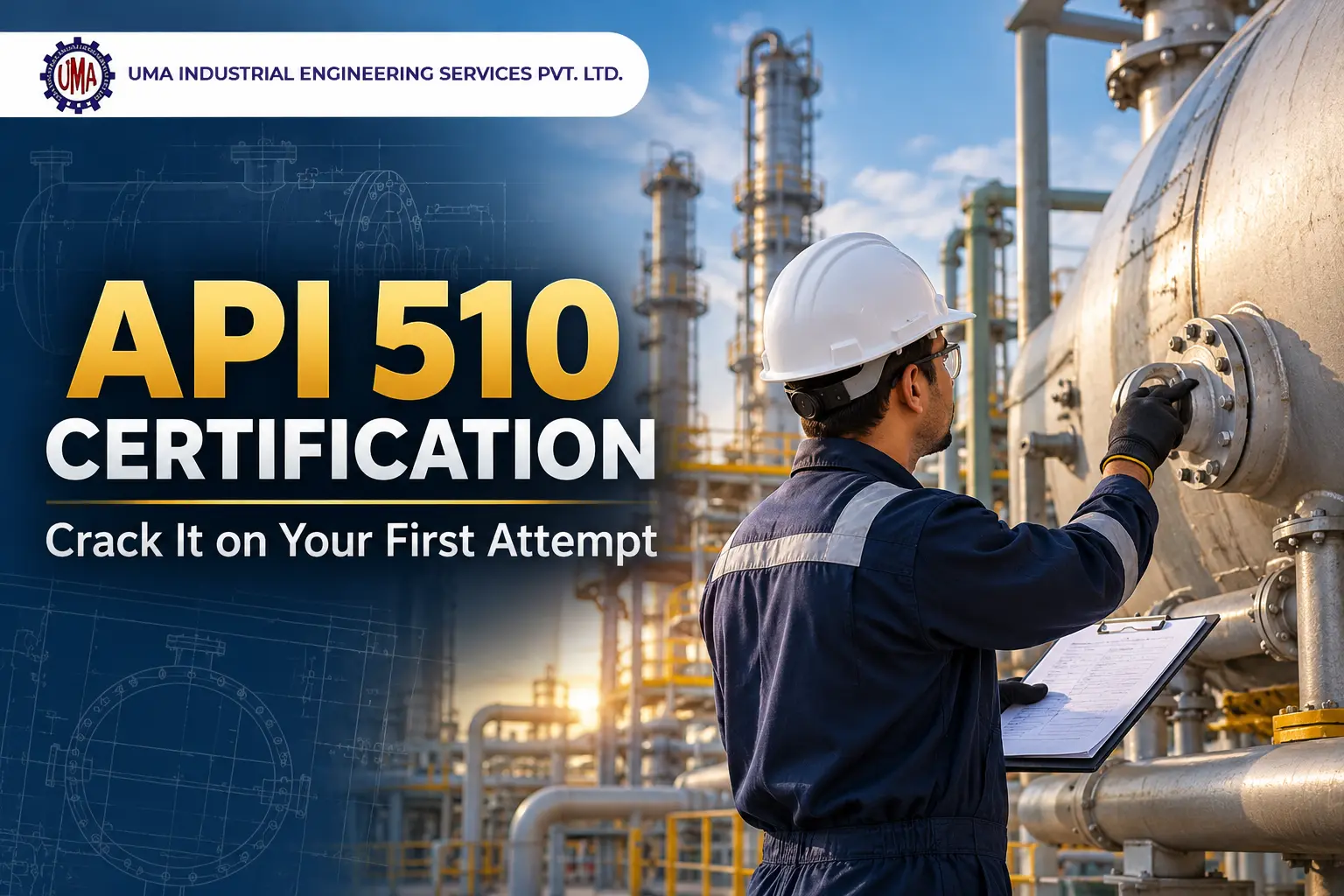
API 510 – Pressure Vessel Inspector
Focuses on the inspection, repair, alteration and maintenance of pressure vessels.
API 570 – Piping Inspector
Covers inspection and integrity management of in-service piping systems.
API 653 – Aboveground Storage Tank Inspector
Focuses on inspection, repair, alteration and reconstruction of aboveground storage tanks.
These are specialized professional certifications with specific eligibility requirements related to education and relevant work experience.
Engineers should review the applicable eligibility criteria before planning their certification journey.
7. Coating Inspection and Corrosion Knowledge
Corrosion protection is an important consideration in industries such as oil and gas, petrochemicals, marine engineering, fabrication and pipeline construction.
Mechanical engineers working in these sectors can benefit from understanding coating inspection and corrosion-control practices.
Key areas include:
- Surface preparation
- Coating systems and applications
- Corrosion mechanisms
- Environmental conditions
- Dry Film Thickness (DFT) measurement
- Coating inspection procedures
- Surface profile measurement
- Inspection reports and documentation
Qualifications such as BGAS can be relevant for professionals interested in painting, coating and corrosion inspection.
Developing these skills can broaden career opportunities in industrial maintenance and infrastructure projects.
8. Technical Drawing and P&ID Interpretation
Reading and interpreting engineering drawings is a practical skill required in many mechanical engineering roles.
Whether working at a project site, fabrication facility or industrial plant, engineers must understand technical drawings to ensure that work is carried out according to project specifications.
Important drawing types include:
- Mechanical engineering drawings
- Fabrication drawings
- Isometric drawings
- Piping and Instrumentation Diagrams (P&IDs)
- Equipment drawings
- Welding details
- Assembly drawings
- Inspection sketches
Strong drawing interpretation skills help engineers coordinate with contractors, inspectors, fabrication teams and project managers.
9. Material Inspection and Traceability
Material inspection is another important responsibility in mechanical QA/QC and industrial inspection.
Engineers must ensure that the materials used in a project meet the required specifications, quality standards and client requirements.
This involves understanding:
- Material grades and specifications
- Material Test Certificates
- Heat number identification
- Material verification
- Inspection and testing requirements
- Material traceability
- Documentation and records
Proper material traceability helps ensure that every material used in a project can be verified against its relevant specifications and inspection records.
These skills are particularly valuable in piping, pressure vessel, fabrication and oil and gas projects.
10. Hydrotesting and Mechanical Testing
Mechanical engineers working with piping systems, pressure vessels and industrial equipment should understand different testing procedures.
Common testing activities include:
- Hydrostatic testing
- Pneumatic pressure testing
- Leak testing
- Dimensional inspection
- Functional testing
- Equipment performance testing
Engineers should understand the purpose of each test, the applicable acceptance criteria, safety requirements and the documentation involved.
Knowledge of these procedures can be particularly useful for mechanical QA/QC and project inspection positions.
11. Communication, Reporting and Coordination Skills
Technical expertise is important, but communication and reporting skills are equally valuable in professional engineering environments.
Mechanical engineers frequently coordinate with clients, consultants, contractors, vendors, inspectors, NDT technicians and project teams.
Their responsibilities may include preparing inspection reports, communicating technical observations, raising NCRs, coordinating inspections and maintaining project documentation.
Developing the ability to explain technical issues clearly, prepare accurate reports and coordinate with different teams can strengthen your professional profile.
Good English communication skills are also beneficial when working with international project teams in the UAE.
12. Industrial and GCC Project Experience
Relevant industry experience is one of the important factors employers consider when recruiting mechanical engineers.
Depending on the position, companies may prefer candidates with experience in:
- Oil and gas projects
- Petrochemical industries
- EPC projects
- Fabrication and construction
- Industrial maintenance
- Piping and pipeline projects
- Manufacturing and quality inspection
Some senior-level vacancies may also request previous UAE or GCC project experience.
However, engineers planning to enter the UAE job market from other countries can start by building relevant industrial experience, gaining practical exposure and developing technical specializations.
A combination of practical experience, recognized qualifications and strong technical knowledge can help make your profile more competitive.
What Certifications Should Mechanical Engineers Consider?
There is no single certification that is suitable for every mechanical engineer. The right qualification depends on your career interests, experience and intended job role.
Here is a general overview of different specialization pathways:
| Career Specialization | Relevant Training or Certifications |
|---|---|
| NDT Inspection | NDT Level II |
| Advanced NDT | PAUT, TOFD, Eddy Current, ACFM |
| Welding Inspection | CSWIP 3.1, CSWIP 3.2, AWS CWI |
| Pressure Vessel Inspection | API 510 |
| Piping Inspection | API 570 |
| Storage Tank Inspection | API 653 |
| Coating Inspection | BGAS |
| Quality Management | QA/QC, ISO 9001 |
| Quality Auditing | ISO 9001 Lead Auditor |
These certifications represent different career pathways. You should select qualifications according to your professional goals rather than trying to complete every available course.
A Step-by-Step Career Roadmap for Mechanical Engineers Targeting UAE
If you are planning to build your mechanical engineering career in the UAE, follow a structured approach.
Step 1: Strengthen Your Technical Fundamentals
Build a strong understanding of mechanical equipment, materials, welding, fabrication, piping systems and engineering drawings.
Step 2: Select Your Career Specialization
Identify the field you want to pursue, such as NDT, welding inspection, QA/QC, coating inspection or mechanical inspection.
Step 3: Gain Practical Industrial Experience
Try to gain hands-on exposure through industrial projects, fabrication facilities, maintenance activities, inspection assignments or QA/QC departments.
Step 4: Pursue Relevant Certifications
Choose recognized training and certification pathways that complement your education and experience.
Step 5: Develop Documentation and Communication Skills
Learn to prepare inspection reports, understand technical documentation and communicate effectively with project teams.
Step 6: Prepare a UAE-Focused CV
Your CV should clearly highlight:
- Mechanical engineering qualifications
- Industrial project experience
- Equipment and systems handled
- Inspection responsibilities
- NDT methods and certifications
- International codes and standards
- QA/QC knowledge
- Technical documentation experience
A well-structured CV should help recruiters quickly understand your technical strengths and specialization.
Common Mistakes Mechanical Engineers Should Avoid
While preparing for UAE job opportunities, engineers should avoid a few common mistakes.
Collecting Certifications Without Practical Experience: Certifications can strengthen your profile, but they do not replace relevant industrial experience.
Applying for Every Available Position: Focus on job roles that match your qualifications, technical knowledge and experience.
Ignoring International Standards: Familiarity with relevant ASME, API, ASTM, AWS and ISO standards can be important for industrial positions.
Underestimating Documentation Skills: Inspection and QA/QC responsibilities involve detailed reporting, material records and compliance documentation.
Neglecting Communication Skills: Engineers must communicate effectively with clients, contractors, consultants and other technical professionals.
Building a focused professional profile is more valuable than simply accumulating certificates.
Why Choose UMA Industrial Engineering Services Pvt. Ltd.?
Building a career in mechanical engineering requires continuous learning, technical specialization and industry-relevant knowledge.
UMA Industrial Engineering Services Pvt. Ltd. provides specialized training programs designed for engineers and professionals interested in developing their expertise in NDT, inspection, welding, QA/QC and industrial certification.
Our training portfolio includes:
- NDT Level II Training
- PCN NDT UT Level II
- PAUT and TOFD Training
- ACFM Training
- Eddy Current Testing
- CSWIP 3.1 and 3.2 Preparatory Training
- BGAS Grade 2 Preparatory Training
- QA/QC Training
- ISO 9001 Lead Auditor Training
- API 510 Training
- API 570 Training
- API 653 Training
Whether you are a recent mechanical engineering graduate or an experienced professional looking to develop a specialized career, selecting the right training pathway can help you strengthen your technical profile.
Our objective is to help professionals build relevant knowledge and prepare for opportunities across industrial inspection and engineering sectors.
Final Thoughts
A Mechanical Engineering degree provides a strong foundation, but developing specialized technical skills can help you explore a wider range of career opportunities in the UAE.
Knowledge of NDT, welding inspection, QA/QC, international codes, mechanical inspection, material traceability and technical documentation can be particularly valuable for professionals targeting industrial engineering positions.
You do not need every available certification to build a successful career.
Start by identifying your preferred specialization, understand the requirements of your target job role, gain relevant practical experience and select certifications that support your career goals.
Start Your UAE Career Preparation with UMA Industrial
Planning to explore mechanical engineering and industrial inspection opportunities in the UAE or GCC?
Take the next step with industry-focused training in NDT, API, CSWIP, BGAS, QA/QC, PAUT, TOFD and other specialized inspection disciplines.
Contact UMA Industrial Engineering Services Pvt. Ltd.
Call: +91 97277 44503
Email: [email protected]
Website: www.umaindustrialengineeringservices.com
Build your technical skills. Choose your specialization. Prepare for your next career opportunity.