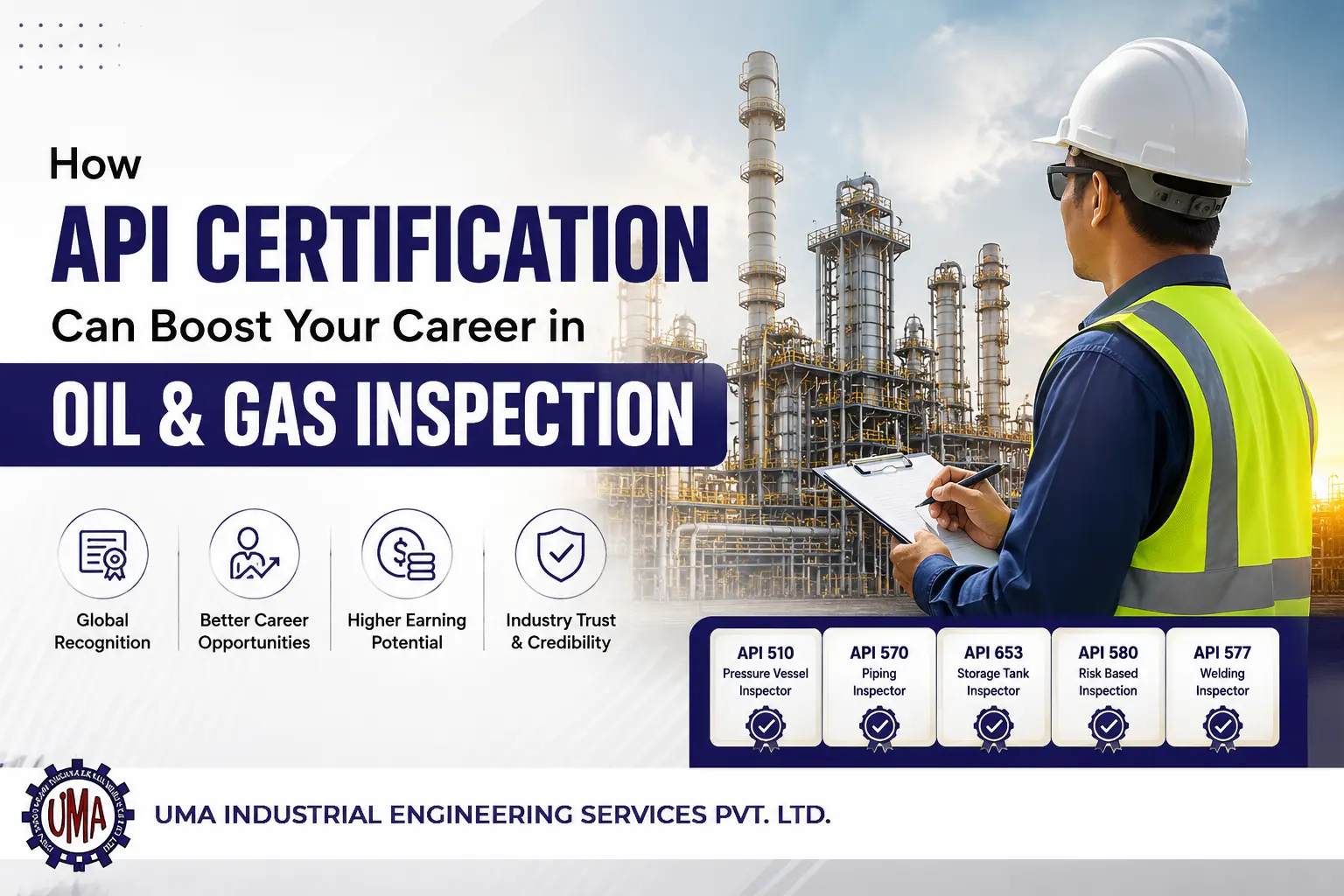
How API Certification Can Boost Your Career in Oil & Gas Inspection
The oil & gas industry demands professionals who can ensure the safety, reliability, and quality of critical equipment. One of the best ways to stand out in this competitive field is by earning an API (American Petroleum Institute) Certification.
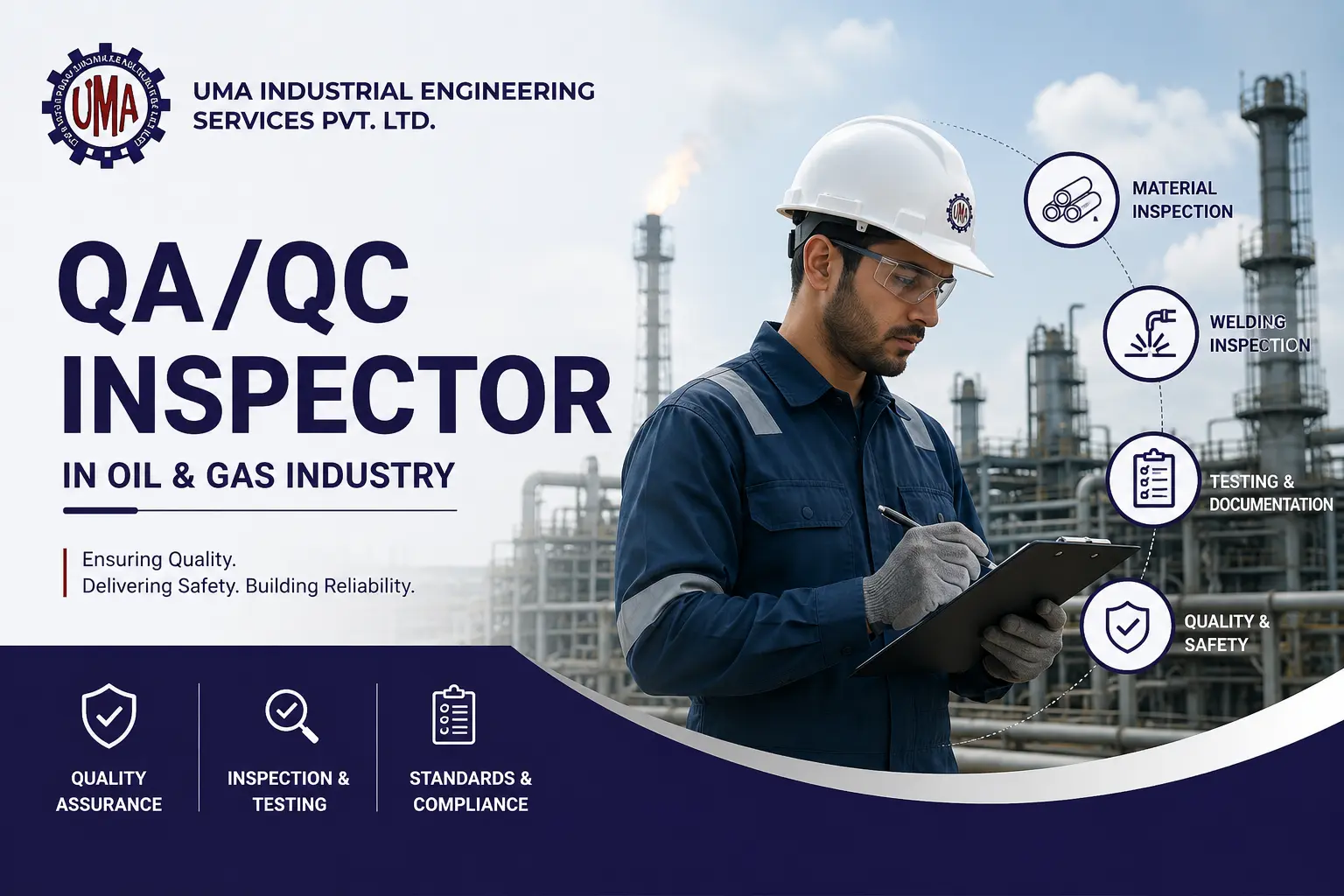
Whether you’re a mechanical engineer, QA/QC professional, NDT technician, or inspection engineer, API certification can open doors to better job opportunities, higher salaries, and global career growth.
What is API Certification?
API Certification is an internationally recognized qualification that validates your knowledge and skills in inspecting pressure vessels, piping systems, storage tanks, and welding standards.
Popular API certifications include:
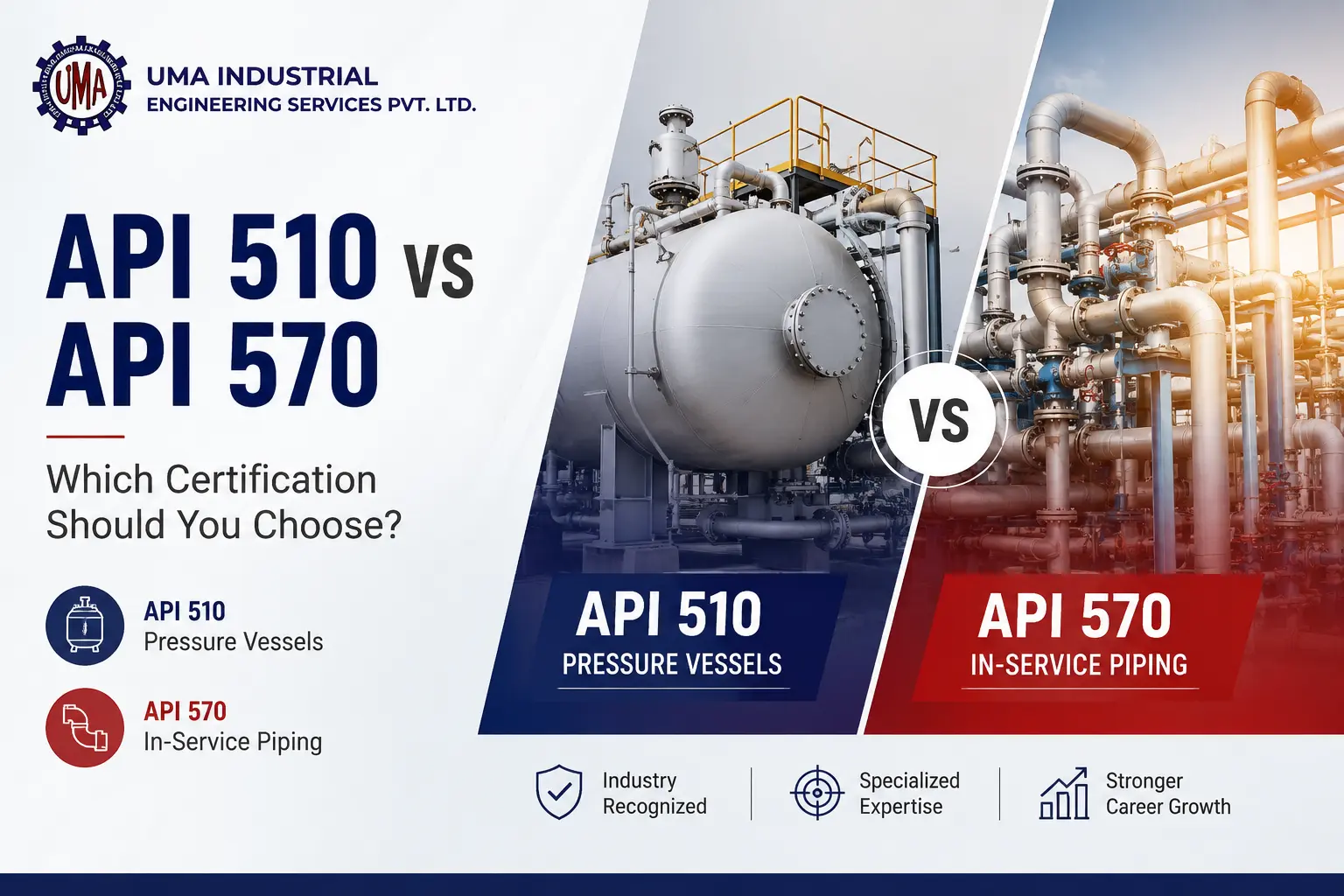
- API 510 – Pressure Vessel Inspector
- API 570 – Piping Inspector
- API 653 – Aboveground Storage Tank Inspector
- API 580 – Risk-Based Inspection (RBI)
- API 577 – Welding Inspection
These certifications are widely accepted by oil & gas companies, refineries, petrochemical plants, and EPC contractors worldwide.
Why API Certification Matters
1. Better Career Opportunities
Many leading oil & gas companies prefer hiring API-certified inspectors because they meet international inspection standards.
2. Higher Salary Potential
Certified professionals often receive better salary packages due to their specialized knowledge and industry recognition.
3. Global Recognition
API certifications are accepted in countries like the UAE, Saudi Arabia, Qatar, Kuwait, Singapore, and many other international markets.
4. Increased Technical Knowledge
Preparing for API exams strengthens your understanding of inspection codes, safety standards, corrosion mechanisms, and equipment integrity.
5. Long-Term Career Growth
API certification helps professionals move into senior inspection, QA/QC, reliability, and asset integrity management roles.
Who Should Pursue API Certification?
API certification is ideal for:
- Mechanical Engineers
- QA/QC Engineers
- Inspection Engineers
- NDT Professionals
- Maintenance Engineers
- Oil & Gas Industry Professionals
If you’re looking to grow your career in inspection and asset integrity, API certification is a valuable investment.
How UMA Industrial Helps You Succeed
At UMA Industrial, we provide industry-focused API training designed to help professionals understand the latest inspection codes and prepare confidently for certification exams.
Our experienced trainers, practical approach, and exam-oriented guidance help students build both technical knowledge and professional confidence.
Conclusion
API certification is more than just a qualification—it’s a career booster that demonstrates your expertise and commitment to quality and safety. As industries continue to prioritize asset integrity and regulatory compliance, certified inspectors are becoming more valuable than ever.
If you’re planning to build a successful career in oil & gas inspection, API certification is a smart step toward achieving your professional goals.
Frequently Asked Questions (FAQs)
1. What is API certification?
API certification is an internationally recognized credential offered by the American Petroleum Institute for professionals working in inspection and asset integrity.
2. Which API certification is best for beginners?
The right certification depends on your experience and job role. API 510, API 570, and API 653 are among the most popular certifications for inspection professionals.
3. Is API certification valid internationally?
Yes. API certifications are widely recognized by oil & gas, petrochemical, and energy companies across the world.
4. Does API certification increase salary?
Yes. API-certified professionals are often preferred for higher-paying inspection and QA/QC positions due to their specialized expertise.
5. Who can enroll in API training?
Mechanical engineers, inspection engineers, QA/QC professionals, NDT technicians, and experienced industry professionals can pursue API certification based on the eligibility requirements for each exam.