Skills Required to Get a Job in the Oil & Gas Industry
The Oil & Gas industry remains one of the most rewarding sectors for engineers, technicians, and skilled professionals. However, securing a job in this competitive field requires more than just a degree. Employers look for candidates who possess a combination of technical knowledge, practical skills, and industry-specific certifications.
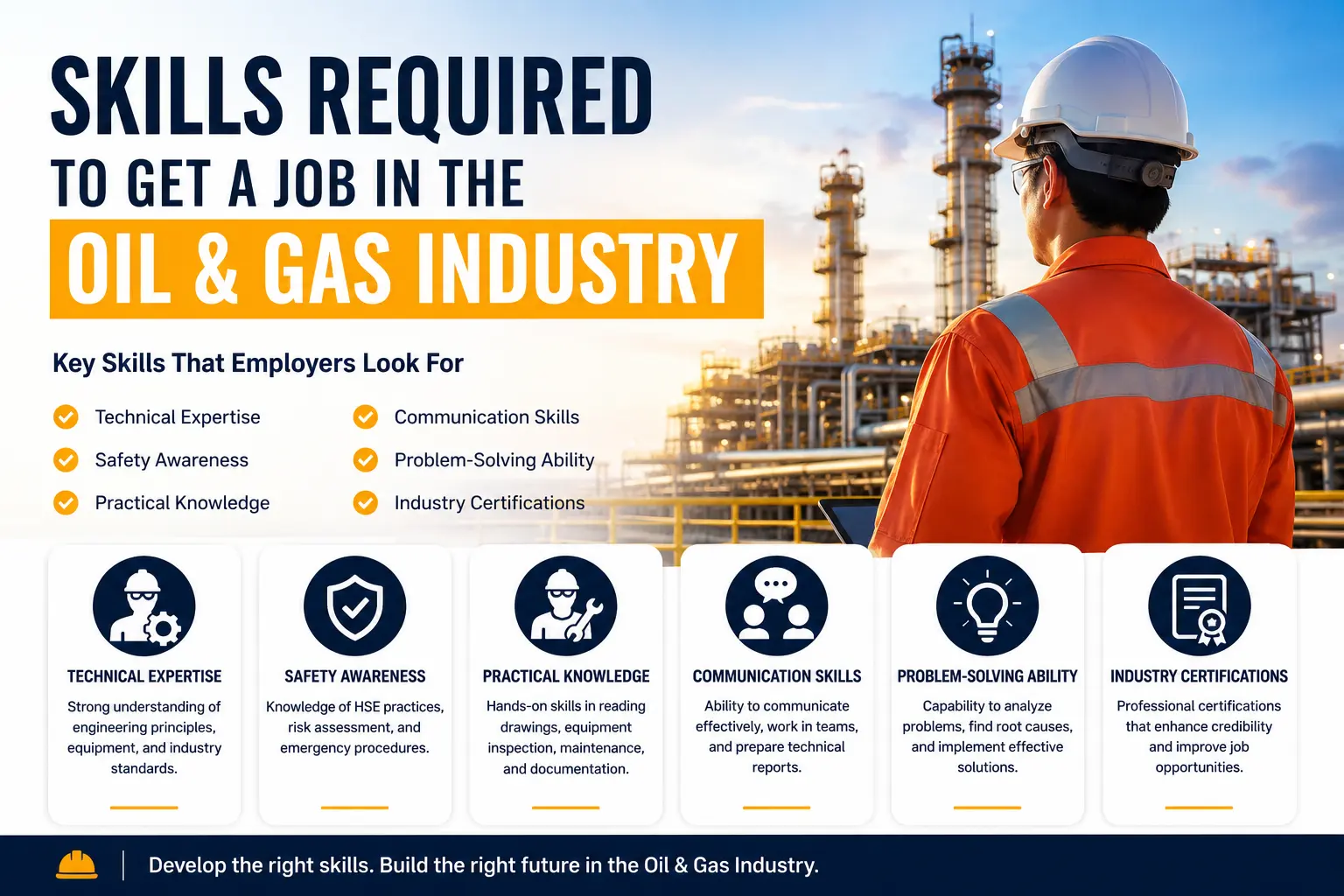
1. Technical Knowledge
A strong understanding of core engineering concepts is essential. Candidates should be familiar with:
- Process Engineering
- Piping Engineering
- Mechanical Equipment Design
- Instrumentation & Control Systems
- Oil & Gas Operations
Having knowledge of industry software and standards can significantly improve employability.
2. Safety Awareness
Safety is a top priority in the Oil & Gas sector. Professionals should understand:
- HSE (Health, Safety & Environment) Practices
- Risk Assessment
- Hazard Identification
- Emergency Response Procedures
Employers highly value candidates who can contribute to maintaining a safe work environment.
3. Practical Industry Skills
Hands-on training helps bridge the gap between education and industry requirements. Skills such as:
- Reading P&ID Drawings
- Equipment Inspection
- Quality Control Procedures
- Maintenance Planning
- Project Documentation
can give candidates a competitive advantage during recruitment.
4. Communication Skills
Oil & Gas projects involve coordination between multiple departments and stakeholders. Strong communication skills help professionals:
- Work effectively in teams
- Prepare technical reports
- Present project updates
- Coordinate with clients and contractors
5. Problem-Solving Ability
The industry often faces operational and technical challenges. Employers seek professionals who can:
- Analyze issues quickly
- Identify root causes
- Develop effective solutions
- Improve operational efficiency
6. Industry Certifications
Certifications enhance credibility and demonstrate practical expertise. Popular certifications include:
- Piping Engineering Courses
- QA/QC Certification
- NDT Certification
- Process Engineering Training
- HSE Training Programs
These certifications can significantly improve job prospects for freshers and working professionals.
Conclusion
Building a successful career in the Oil & Gas industry requires a combination of technical expertise, safety awareness, practical training, and strong communication skills. By developing these skills and gaining industry-relevant certifications, candidates can increase their chances of securing rewarding opportunities in this growing sector.
Frequently Asked Questions (FAQs)
1. What skills are most important for Oil & Gas jobs?
Technical knowledge, safety awareness, problem-solving ability, communication skills, and practical industry training are among the most important skills.
2. Do freshers need certifications to enter the Oil & Gas industry?
While not mandatory, industry-recognized certifications can significantly improve employability and help freshers gain practical knowledge.
3. Which engineering branches are suitable for the Oil & Gas industry?
Mechanical, Chemical, Electrical, Instrumentation, Petroleum, and Civil Engineering graduates can find opportunities in the sector.
4. Is Oil & Gas a good career choice in 2026?
Yes. The industry continues to offer strong career opportunities, competitive salaries, and demand for skilled professionals across various disciplines.
5. How can I improve my chances of getting hired?
Focus on developing technical skills, completing industry-relevant training programs, gaining practical exposure, and earning professional certifications.