Which NDT Method is Best for Industrial Inspection?
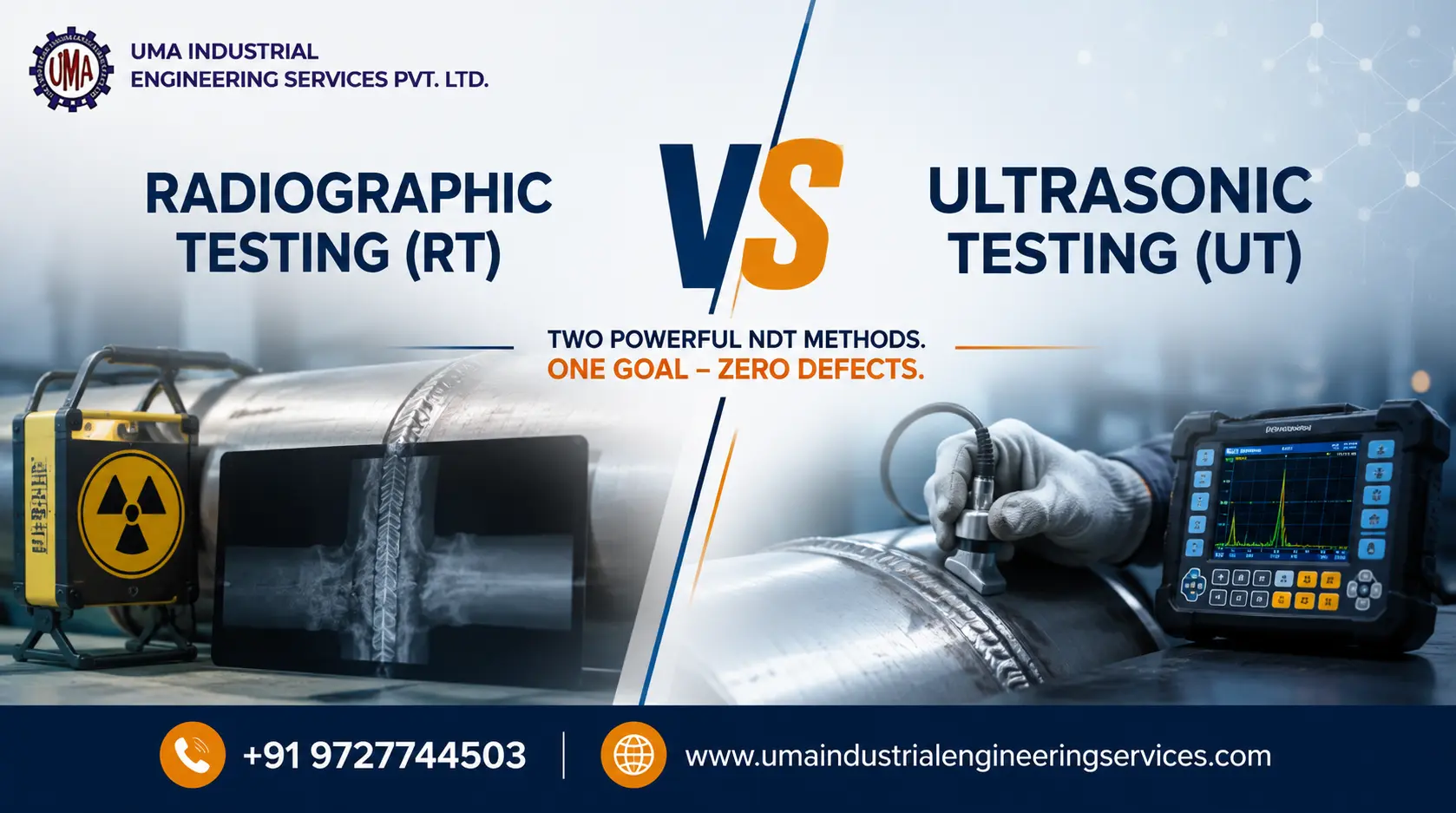
In the world of Non-Destructive Testing (NDT), selecting the right inspection method is essential for ensuring product quality, structural integrity, and workplace safety. Two of the most widely used techniques are Radiographic Testing (RT) and Ultrasonic Testing (UT). While both methods are highly effective in detecting internal defects, they work differently and are suitable for different applications. Understanding the difference between Radiographic Testing vs Ultrasonic Testing helps engineers, inspectors, and industries choose the best inspection method for their projects.
What is Radiographic Testing (RT)?
Radiographic Testing (RT) is an NDT method that uses X-rays or Gamma rays to inspect the internal structure of materials. The radiation passes through the test object and creates an image on a digital detector or film, allowing inspectors to identify hidden defects such as cracks, porosity, voids, and inclusions.
Best Applications of RT:
- Weld inspection
- Pressure vessels
- Pipelines
- Castings
- Aerospace components
What is Ultrasonic Testing (UT)?
Ultrasonic Testing (UT) uses high-frequency sound waves to detect internal flaws and measure material thickness. A probe sends ultrasonic waves into the material, and the reflected signals help inspectors locate and size defects with high accuracy.
Best Applications of UT:
- Steel structures
- Forgings
- Weld inspection
- Pressure vessels
- Power plants
- Oil & Gas equipment
RT vs UT: Key Differences
| Feature | Radiographic Testing (RT) | Ultrasonic Testing (UT) |
|---|---|---|
| Inspection Method | X-rays or Gamma rays | High-frequency sound waves |
| Defect Detection | Internal defects with visual image | Internal defects with precise depth and location |
| Safety | Requires radiation safety measures | No radiation hazards |
| Portability | Limited | Highly portable |
| Thickness Measurement | Not suitable | Highly accurate |
| Inspection Speed | Moderate | Fast |
| Cost | Higher | Cost-effective for many applications |
Which Method Should You Choose?
The choice between Radiographic Testing (RT) and Ultrasonic Testing (UT) depends on the inspection requirements. RT is ideal when permanent visual records of internal defects are required, while UT is preferred for fast, accurate inspections, thickness measurement, and field applications. Many industries use both methods together to achieve comprehensive inspection results and meet international quality standards.
Conclusion
Both Radiographic Testing (RT) and Ultrasonic Testing (UT) play a crucial role in modern industrial inspection. Choosing the right NDT method depends on factors such as material type, accessibility, project requirements, safety considerations, and inspection objectives. Gaining practical knowledge and professional training in both RT and UT enables engineers and inspectors to make informed decisions, improve inspection accuracy, and enhance career opportunities in the NDT and QA/QC industry.
Frequently Asked Questions (FAQs)
Q1. What is the main difference between RT and UT?
RT uses X-rays or Gamma rays to produce images of internal defects, while UT uses ultrasonic sound waves to detect and locate flaws.
Q2. Which is safer: Radiographic Testing or Ultrasonic Testing?
Ultrasonic Testing is generally safer because it does not involve ionizing radiation.
Q3. Which NDT method is better for weld inspection?
Both RT and UT are excellent for weld inspection. The choice depends on the weld type, accessibility, applicable standards, and project requirements.
Q4. Can Ultrasonic Testing measure material thickness?
Yes. UT is widely used for accurate thickness measurement and corrosion monitoring.
Q5. Which industries commonly use RT and UT?
Oil & Gas, petrochemical, power plants, aerospace, manufacturing, shipbuilding, construction, and heavy engineering industries extensively use both inspection methods.